



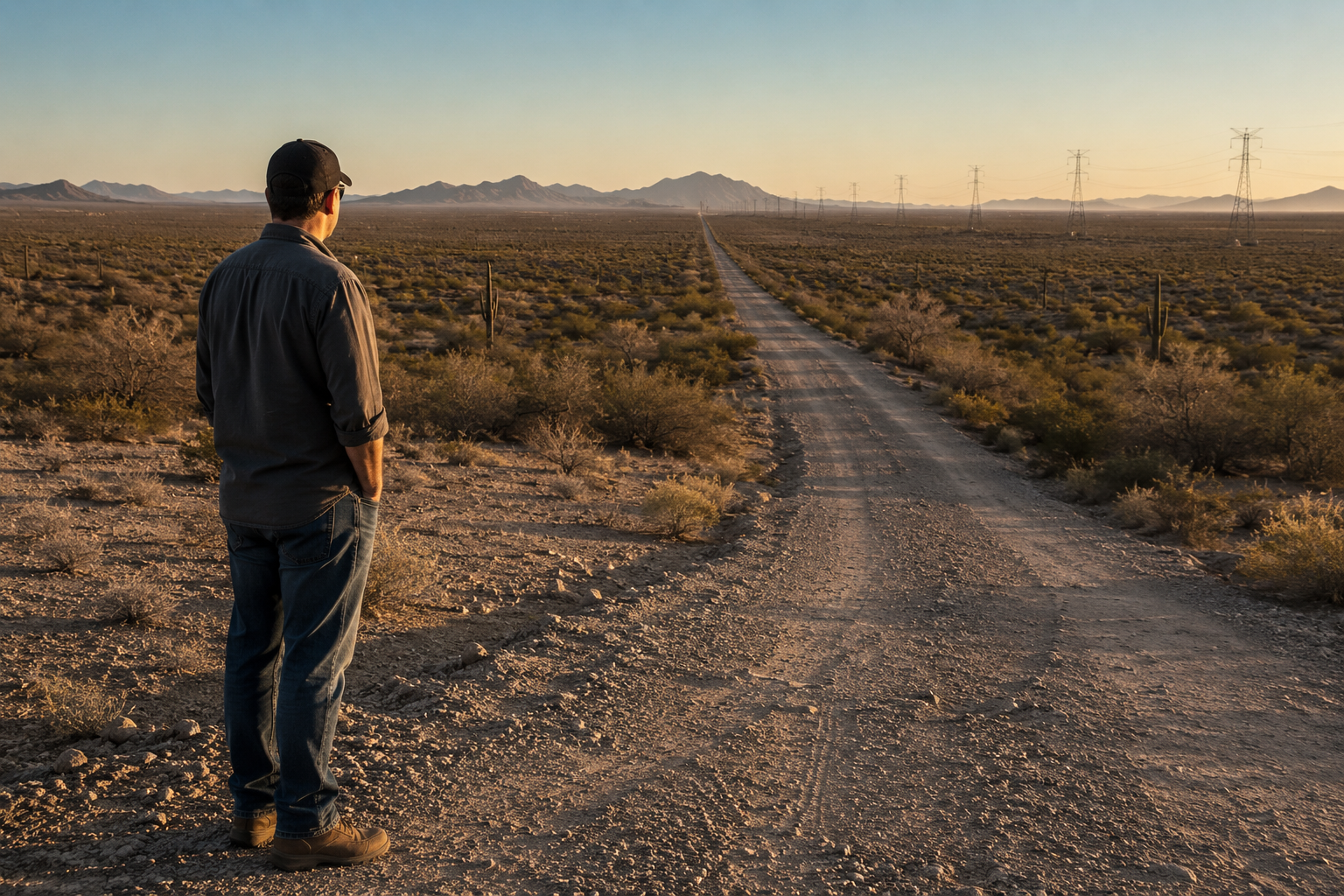
Raw land is one of the few purchases where the thing you're buying gives you almost no feedback about whether it's a good fit for what you need. A house has walls, a roof, a kitchen — you can walk through it and get a feel for it pretty quickly. A vacant parcel just sits there, and most of what matters about it is invisible until you start digging into the details. That gap between what you see and what you're actually getting is exactly where most buyers run into trouble — they fall for a good price or a nice view, then find out months later that the land can't be built on, doesn't have road access, or sits inside a flood zone. People buy raw land for all kinds of reasons — building a custom home, running a small farm, setting up a weekend retreat, or simply holding it as a long-term investment — and the right due diligence process looks a little different depending on which of those goals you're working toward. What makes this harder right now is that many parcels are still moving in under 60 days, so there's real pressure to decide fast, even as buyers are getting more careful about access, utilities, and buildability. This article gives you a practical seven-step roadmap to cut through that pressure and make a confident, well-informed decision. You'll start with the biggest filters first — the questions that can rule a parcel out immediately — then work your way into the finer details. So where does that process actually begin?
Step 1: Know Exactly Why You Are Buying the Land
Every parcel of raw land can look equally promising on a listing page, but what makes one property the right choice has everything to do with your intended purpose. Two buyers looking at the same 10-acre lot could walk away with completely opposite conclusions — because what one needs, the other doesn't. Your end goal is the filter that makes every other evaluation criterion fall into place.
Future Home Site
When your plan is to build a residence, the land itself needs to be capable of supporting construction before anything else matters. That means checking whether the soil can handle a septic system, whether a paved or maintained road already provides legal access, how close the nearest power and water lines are, and whether the local zoning actually permits a single-family dwelling. A beautiful parcel with no road frontage or poor percolation test results can cost you far more to develop than you saved on the purchase price.
Small Farm
Agricultural land comes with its own set of demands that have nothing to do with building permits. Water availability is the first thing to pin down — whether that's a well, a creek with water rights, or proximity to an irrigation district. From there, soil composition and drainage patterns determine what you can actually grow or raise. Some counties also restrict farming operations to parcels zoned specifically for agricultural use, so confirming that designation early keeps you from buying land that can't legally support what you're planning.
Recreational Retreat
A hunting cabin, fishing camp, or off-grid weekend property gets evaluated on a completely different set of terms. Privacy matters more than utility proximity, and seasonal road access — meaning whether you can physically get to the property in winter or during wet months — is often the deciding factor. Wildlife habitat, timber coverage, and water features like ponds or creek frontage all add functional value depending on how you plan to use the space. Basic usability, not full development potential, is what you're really assessing here.
Long-Term Investment
Buying land to hold and sell later shifts your focus toward external factors rather than the land's current condition. The Food and Agriculture Organization describes this as "potential suitability" — meaning the land's value at some future point after conditions or improvements change. That means looking at growth corridors near the parcel, whether nearby infrastructure is expanding, and how flexible the zoning classification is. Land that can serve multiple future uses — residential, commercial, or agricultural — gives you more options when it's time to sell.
Defining your non-negotiables before you start browsing listings saves you from wasting time on properties that were never going to work. Write them down before you open a single listing page —
- Intended use and any zoning requirements that use demands
- Minimum acreage needed for that use
- Road access type — paved, gravel, or seasonal
- Utility requirements — grid power, well, septic, or off-grid
- Distance limits from a specific town, city, or highway
Step 2: Check Zoning and Permitted Uses Before You Get Attached
A parcel can check every box on your list — the right acreage, the right price, the right general location — and still be completely off the table for what you actually want to do with it. The legal classification attached to that land controls far more than most buyers realize, and finding out after you've made an offer is a costly way to learn that lesson.
Zoning tells you what activities are legally allowed on a given parcel, and the range between classifications is wide. A residentially zoned lot operates under entirely different rules than one designated for agricultural or open-space use. What makes this more nuanced is that not all permitted uses work the same way — some are allowed outright, while others require an additional layer of approval. Los Angeles City Planning's Zoning Use List makes this distinction clear, noting that "uses are permitted by-right in zones colored black," while "uses require a conditional use permit (CUP) or similar quasi-judicial approval in zones colored red." That difference matters because a CUP means going through a public hearing process, which adds time, cost, and uncertainty to your plans before you've broken ground on anything.
Beyond the base zoning classification, there are other layers that can further restrict what you're capable of doing with the land. Deed restrictions — which are private agreements recorded against the title — can prohibit certain structures or uses regardless of what the zoning allows. Setback requirements dictate how far any structure must sit from property lines, roads, or waterways, and on smaller parcels, these rules can make building a full-size home practically impossible. Some parcels also sit within overlay zones or special planning areas that add requirements on top of the base zoning, which is something a standard listing description will never tell you.
The practical impact of these rules becomes very concrete when you look at specific use cases. Agricultural land, for example, may not permit a full-time residence at all — meaning you can farm it but can't legally live on it. A parcel you're eyeing for an ADU, livestock operation, or recreational cabin may fall under the same conditional use permit process described above, where "commercial grazing, breeding, boarding, raising, or training of domestic animals" and "farming" are only eligible in specific zones. In California and the greater Los Angeles area especially, environmental review requirements and grading permit conditions can add months to a project timeline and significantly affect what a parcel is actually worth to develop, making zoning and approval status just as important to evaluate as acreage or proximity to a city center.
Calling the county planning department directly — before making an offer — gives you answers that no listing page will provide. Pair that with a review of the county's GIS mapping portal, which shows parcel-level zoning data, overlay districts, and flood designations in one place, and you're capable of making a far more informed decision about whether a property genuinely fits your plans.
No source link or source content summary was provided, so I cannot add any external linking. Here is the original section unchanged:
Step 3: Make Sure the Land Has Real Access and Realistic Utility Options
Pricing on raw land can be deceptive, and access plus utilities are the two fastest ways to find out whether a low asking price is actually a bargain or just the beginning of a much larger bill. These aren't details to sort out after you've made an offer — they're filters that should shape whether you make an offer at all.
Confirm Legal and Physical Access
Access to a parcel comes in three forms — public road frontage, private road access, and recorded legal easements. Public road frontage means the parcel directly borders a government-maintained road, which is the most straightforward situation. Private road access means you're relying on a road maintained by a homeowners' association, a neighboring landowner, or some other private arrangement. A recorded easement is a legal right-of-way documented in the county records that grants you the ability to cross another person's land to reach yours.
A parcel with no recorded access — sometimes called a landlocked parcel — is one of the most serious problems you can run into. Verbal agreements with neighbors or informal driveway arrangements that aren't tied to the title offer you no legal protection, and they can disappear the moment that neighbor sells their property. Before anything else, pull the title report and confirm that legal access is documented and enforceable.
Check Utility Availability Before You Assume Anything
Once access is confirmed, the next thing to work through is what utilities are actually available at the parcel — not just nearby, but at the property line or within a reasonable distance. The four categories to verify are —
- Power — Is there an active electrical connection, or is the nearest utility line a quarter mile away? Distance matters because you pay for every foot of extension.
- Water — Does the parcel connect to a municipal water system, or will you need a private well? If a well is required, find out what depth other wells in the area have been drilled to.
- Sewer or septic — Confirm whether the county sewer system reaches the parcel, or whether a septic system will need to be designed and installed. Soil percolation tests determine whether septic is even feasible on the land.
- Internet/cell service — Check coverage maps for the area and, if possible, test signal on-site. Remote parcels can have dead zones that no carrier currently serves.
Rural, desert, mountain, and foothill parcels often require buyers to build their own infrastructure from scratch — well drilling, septic installation, solar panels with battery storage, trenching for underground lines, or paying for long utility extensions from the nearest connection point.
Add Setup Costs Into the Real Purchase Price
A parcel listed at $40,000 can realistically cost $120,000 or more once you factor in a graded gravel driveway at $10,000–$20,000, a drilled well at $15,000–$50,000 depending on depth, a septic system at $10,000–$30,000, and a power line extension that can run $25,000–$50,000 or higher depending on distance from the nearest transformer.
Treating those infrastructure costs as separate from the purchase price is a mistake that catches a lot of buyers off guard — the true cost of owning and using that land is the sum of all of it together.
Step 4: Study the Land Itself and the Risks That Come With It
Getting zoning and access sorted out puts you in a strong position, but those approvals say nothing about whether the land is physically capable of supporting what you want to build or do on it. A parcel can be fully entitled for residential development and still cost you twice your budget to actually use — because the ground itself is steep, unstable, waterlogged, or sitting in the path of a wildfire. The physical condition of the land is its own separate evaluation, and it deserves just as much scrutiny as any legal document.
Slope and soil type are the two characteristics that shape almost everything else about a parcel's usability. Steep grades make construction harder, more expensive, and in some cases structurally risky. Clay-heavy soils drain poorly and can shift under a foundation over time. Even flat land isn't automatically safe — a level parcel sitting in poorly draining soil or a low-lying basin can collect standing water after heavy rain, making it unsuitable for septic systems, farming, or any kind of permanent structure. Topography and drainage patterns need to be read together, not separately.
The cost difference between a flat, well-drained parcel and a sloped one is significant. Grading a hillside lot to create a usable building pad can run anywhere from $5,000 to $30,000 or more depending on the severity of the slope and the volume of material that needs to be moved. Add erosion control measures — retaining walls, drainage channels, hydroseeding — and the number climbs further. An engineered driveway on a steep grade requires compaction work, proper drainage culverts, and sometimes switchback designs that add both length and cost. All of that comes before a single foundation is poured.
Flood risk deserves its own focused review. The National Flood Insurance Program's hydrologic method and USACE assessments both evaluate "flood hazard — the probability and magnitude of flooding" as a core component of site risk, which means the question isn't just whether a parcel floods, but how often and how severely. Runoff patterns from neighboring parcels and uphill terrain can send water across your land even if it isn't technically inside a mapped floodplain. Visiting a property only during dry months gives you an incomplete picture — roads that look passable in August can turn into muddy tracks in January, and low areas that appear dry can hold standing water for weeks after a storm.
California adds another layer of physical risk that buyers in other states don't face at the same scale. Hillside parcels in fire-prone counties — places like San Bernardino, Riverside, and Shasta — sit inside High or Very High Fire Hazard Severity Zones where defensible space requirements, construction standards, and insurance availability all become serious considerations. Road washouts during heavy rain seasons can cut off access to remote parcels for days at a time, and unstable hillsides with a history of movement can make building permits difficult or impossible to obtain.
Wetland designations, protected wildlife corridors, and habitat conservation areas can restrict what you're permitted to do on a parcel even when zoning says otherwise. Fencing, grading, farming, and even recreational trail-cutting can trigger environmental review requirements if the land sits within or adjacent to a protected area. Visiting the property across different seasons — not just once on a clear summer afternoon — gives you a far more accurate read on what you're actually buying.
Step 5: Verify Boundaries, Title, and Legal Details Before You Spend Serious Money
Legal boundaries, title issues, and access rights rarely show up in a listing description — but they're the details that can quietly derail a purchase, trigger legal disputes, or make a parcel impossible to finance or resell down the line.
Boundary Lines Are Not the Same as What You See on the Ground
A fence running along the edge of a property feels like a reliable indicator of where one parcel ends and another begins, but fences get built by neighbors, not surveyors. They shift, they get rebuilt, and they're often placed based on assumption rather than legal documentation. A seller's verbal description of the property lines carries even less weight, and county GIS parcel maps — while useful for general reference — are not legally binding boundary documents. The Arizona Department of Real Estate's Property Buyer's Checklist puts it directly, advising buyers to "check the plat map to make sure the lot boundaries are as represented."
When corner markers are missing, boundary lines appear inconsistent with what's shown on the plat, or the parcel shape seems irregular, ordering a professional land survey is the right move. A licensed surveyor physically locates the legal corners of the parcel and produces a document you can rely on — one that holds up if a boundary dispute ever arises.
Title Review Reveals Easements, Exceptions, and Restrictions
A preliminary title report is one of the most important documents you can get your hands on during this process. It pulls together the recorded history of a parcel — past ownership transfers, liens, easements, and any restrictions attached to the land — and gives you a clear picture of what you're actually acquiring. The Arizona Department of Real Estate explicitly advises buyers to "obtain and review a preliminary title report" as a core step in avoiding purchase pitfalls. Once you have that report, there are specific items worth investigating closely —
- Shared driveways that serve multiple parcels
- Evidence of a neighbor regularly using or crossing the parcel
- Unrecorded roads or informal paths that cross the property
- Encroachments from adjacent structures or improvements
- Unclear or missing corner markers that don't match recorded plat data
- Recorded easements or CC&Rs that limit what you can build, operate, or sell
Bring in the Right Professionals Before Spending More Money
The earlier you bring in a title company, a licensed surveyor, and a real estate professional with specific land transaction experience, the more capable you are of catching problems before they compound. Title companies run searches that surface recorded restrictions and ownership gaps you'd never find on your own. Surveyors confirm whether the physical parcel matches its legal description. A land-experienced agent or attorney knows what questions to ask the county planning department and can flag unusual title exceptions that a general residential agent might overlook. Paying for these professionals upfront is far less expensive than discovering a boundary conflict or an unresolved easement after you've already committed funds to due diligence, engineering reports, or permit applications.
Documented boundaries, verified legal access, and a clean title report make it significantly easier to secure financing, move forward with development, and attract qualified buyers when the time comes to sell.
Step 6: Add Up the Full Cost Instead of Focusing Only on the List Price
The asking price on a raw land listing is really just the entry point — what you actually spend to own and use that land is a different number entirely. Two parcels priced identically can have wildly different total costs depending on what each one needs to become functional, and the one with the lower sticker price often ends up being the more expensive purchase once everything is factored in.
Before you even close on a parcel, there's a layer of transaction and due-diligence expenses that most buyers don't fully account for. Closing costs, title insurance, survey fees, legal review, and zoning consultation all hit before a single shovel touches the ground. Soil testing and perc tests — which determine whether the land can support a septic system — add to that figure quickly. As one industry source puts it, "if the land does not pass a percolation test, or 'perk test,' you may need an engineered septic system, which can increase costs significantly." These aren't optional expenses you can skip to save money — they're the costs that tell you whether the land is even viable for your plans.
Development costs are where the gap between list price and true cost becomes most dramatic. "Even a lot that looks beautiful at first glance may require significant preparation before a home can be built" — and that preparation covers tree and brush clearing, grading uneven terrain, driveway construction, well drilling, septic installation, and utility extensions from the nearest connection point. Each of those line items carries real weight. A gravel driveway alone can run $10,000–$20,000, and a drilled well can reach $50,000 depending on depth and geology. Stacking those numbers against the purchase price gives you a far more honest picture of what you're committing to.
Carrying costs are the third category, and they're the easiest to underestimate because they accumulate quietly over time. If you're financing the purchase, loan payments start immediately — regardless of whether the land is generating any income or moving through the permitting process. Property taxes, insurance, and basic maintenance continue month after month while you wait for entitlements, approvals, or the right market conditions to develop or sell. Raw land is often priced low precisely because it's uncertain, but that uncertainty doesn't stay cheap — every month of delay adds to the real cost of ownership.
Disciplined buyers now treat entitlement timelines and holding costs as part of the deal structure from day one, not as afterthoughts. Permitting delays, environmental reviews, and zoning appeals can stretch a timeline by months or years, and every one of those months has a cost attached to it. Buyers who price that risk in from the start are far better positioned to make sound decisions — and far less likely to find themselves stuck with a parcel that doesn't pencil out.
Comparing parcels by total improvement cost — rather than price per acre — is what separates a well-reasoned purchase from one that looks good on paper and falls apart in execution. "Build a buffer into your budget and ask for a full breakdown of potential soft costs during your due-diligence period."
Step 7: Think About Resale Flexibility Before You Make an Offer
Once you've built out a full cost picture in Step 6, there's one more layer worth working through before you commit — how easy would this parcel be to sell if your situation changed? That question shifts your thinking from pure cost to long-term value, and it's one of the most practical filters you can apply before signing anything.
Why Exit Strategy Matters Even for Personal Buyers
Most people buying raw land for personal use don't spend much time thinking about selling it. That's understandable — you're focused on what you want to build or do with the property. But plans change. Financing conditions shift, timelines stretch, and life circumstances evolve in ways that are hard to predict at the time of purchase. A parcel that only works for one very specific use — say, a niche agricultural operation with limited road access — is a parcel that a much smaller pool of buyers would ever consider. That narrowness doesn't just affect future resale, it affects your negotiating position right now.
The Features That Make a Parcel Easier to Resell
Certain characteristics make land consistently easier to market, regardless of who the next buyer turns out to be. Mossy Oak Properties, a national rural land real estate brand, identifies several resale-relevant factors worth evaluating — location relative to roads and infrastructure, utility access, zoning flexibility, and market demand for that type of land in the area. These aren't just abstract value drivers — they're the specific things a future buyer will scrutinize just as carefully as you are now.
Run through these questions before making an offer —
- Does the parcel have documented legal access from a public road, or does it depend on a private arrangement?
- Are utilities — power, water, or at minimum a viable well site — already confirmed or realistically achievable?
- Does the zoning support more than one type of use, such as residential and agricultural, rather than a single restricted designation?
- Is the parcel size practical — large enough to be useful but not so large that it limits the buyer pool?
- Are there any environmental restrictions, flood designations, or habitat overlays that would complicate future development?
Evaluating the Property from the Next Buyer's Perspective
Stepping into a future buyer's shoes is a genuinely useful exercise. That buyer will ask the same questions any informed purchaser asks — what can I actually do here, how hard is it to get to, and what will it cost me to make it functional? A parcel with clear answers to all three is one that holds its appeal across different market conditions. One that requires extensive explanation, workarounds, or specialized knowledge to understand tends to sit longer and sell for less.
Treating land as a one-dimensional asset — useful only for your exact plan — leaves you exposed if anything changes. The most capable buyers choose parcels that serve their immediate purpose while remaining straightforward for someone else to value, finance, and use. That combination of present utility and future marketability is what separates a sound purchase from one that just looked good on the day you visited. bigger land is harder to sell
Wait — I need to correct my approach. I should not add new text. Let me provide the properly linked version:
Step 7: Think About Resale Flexibility Before You Make an Offer
Once you've built out a full cost picture in Step 6, there's one more layer worth working through before you commit — how easy would this parcel be to sell if your situation changed? That question shifts your thinking from pure cost to long-term value, and it's one of the most practical filters you can apply before signing anything.
Why Exit Strategy Matters Even for Personal Buyers
Most people buying raw land for personal use don't spend much time thinking about selling it. That's understandable — you're focused on what you want to build or do with the property. But plans change. Financing conditions shift, timelines stretch, and life circumstances evolve in ways that are hard to predict at the time of purchase. A parcel that only works for one very specific use — say, a niche agricultural operation with limited road access — is a parcel that a much smaller pool of buyers would ever consider. That narrowness doesn't just affect future resale, it affects your negotiating position right now.
The Features That Make a Parcel Easier to Resell
Certain characteristics make land consistently easier to market, regardless of who the next buyer turns out to be. Mossy Oak Properties, a national rural land real estate brand, identifies several resale-relevant factors worth evaluating — location relative to roads and infrastructure, utility access, zoning flexibility, and market demand for that type of land in the area. These aren't just abstract value drivers — they're the specific things a future buyer will scrutinize just as carefully as you are now.
Run through these questions before making an offer —
- Does the parcel have documented legal access from a public road, or does it depend on a private arrangement?
- Are utilities — power, water, or at minimum a viable well site — already confirmed or realistically achievable?
- Does the zoning support more than one type of use, such as residential and agricultural, rather than a single restricted designation?
- Is the parcel size practical — large enough to be useful but not so large that it limits the buyer pool?
- Are there any environmental restrictions, flood designations, or habitat overlays that would complicate future development?
Evaluating the Property from the Next Buyer's Perspective
Stepping into a future buyer's shoes is a genuinely useful exercise. That buyer will ask the same questions any informed purchaser asks — what can I actually do here, how hard is it to get to, and what will it cost me to make it functional? A parcel with clear answers to all three is one that holds its appeal across different market conditions. One that requires extensive explanation, workarounds, or specialized knowledge to understand tends to sit longer and sell for less.
Treating land as a one-dimensional asset — useful only for your exact plan — leaves you exposed if anything changes. The most capable buyers choose parcels that serve their immediate purpose while remaining straightforward for someone else to value, finance, and use. That combination of present utility and future marketability is what separates a sound purchase from one that just looked good on the day you visited.
Final Thoughts
Buying raw land gets a lot more manageable when you work through the right filters in the right order. That's really the core idea behind everything covered in this article.
Starting with your goals keeps every other decision grounded. From there, zoning tells you what's actually allowed on the property, access and utilities tell you what it'll cost to make it functional, and reviewing the land's physical conditions helps you avoid parcels that look good on paper but come with serious problems on the ground. Legal verification protects your ownership, a full cost breakdown keeps your budget realistic, and understanding long-term resale potential means you're not just buying for today.
That seven-step sequence isn't arbitrary. Each step builds on the one before it, so by the time you're ready to make an offer, you're not guessing. You're deciding based on real information.
That's where confidence actually comes from in a land purchase. Not from gut feelings or a seller's pitch, but from doing the work. Buyers who skip steps are the ones who end up with landlocked parcels, unexpected development restrictions, or costs they never saw coming. You're now capable of avoiding all of that.
The best parcel isn't necessarily the cheapest or the largest. It's the one that fits your plans, stays within your budget, and leaves you with solid future options and no hidden surprises waiting on the other side of closing.
Take what you've learned here and go find that parcel.
Check out this article next